

Key Takeaways
- Roughly one in five people in addiction treatment also has ADHD — about 21%, compared with 3-5% of adults in the general population (Rohner et al., 2023).
- Self-medicating ADHD with alcohol, cannabis, cocaine, or nicotine works for a few hours, then makes focus, sleep, and impulsivity worse — so the dose climbs and dependence follows.
- Prescribed stimulants taken as directed do not turn into addiction. The largest analysis found stimulant treatment neither increases nor protects against later substance problems (Humphreys et al., 2013).
- The dangerous pattern is untreated ADHD plus street drugs — not a doctor’s prescription. Getting the ADHD properly assessed and treated is the fix, not the risk.
- At One Step we treat ADHD and addiction together as dual diagnosis, because treating one and ignoring the other is why people relapse.
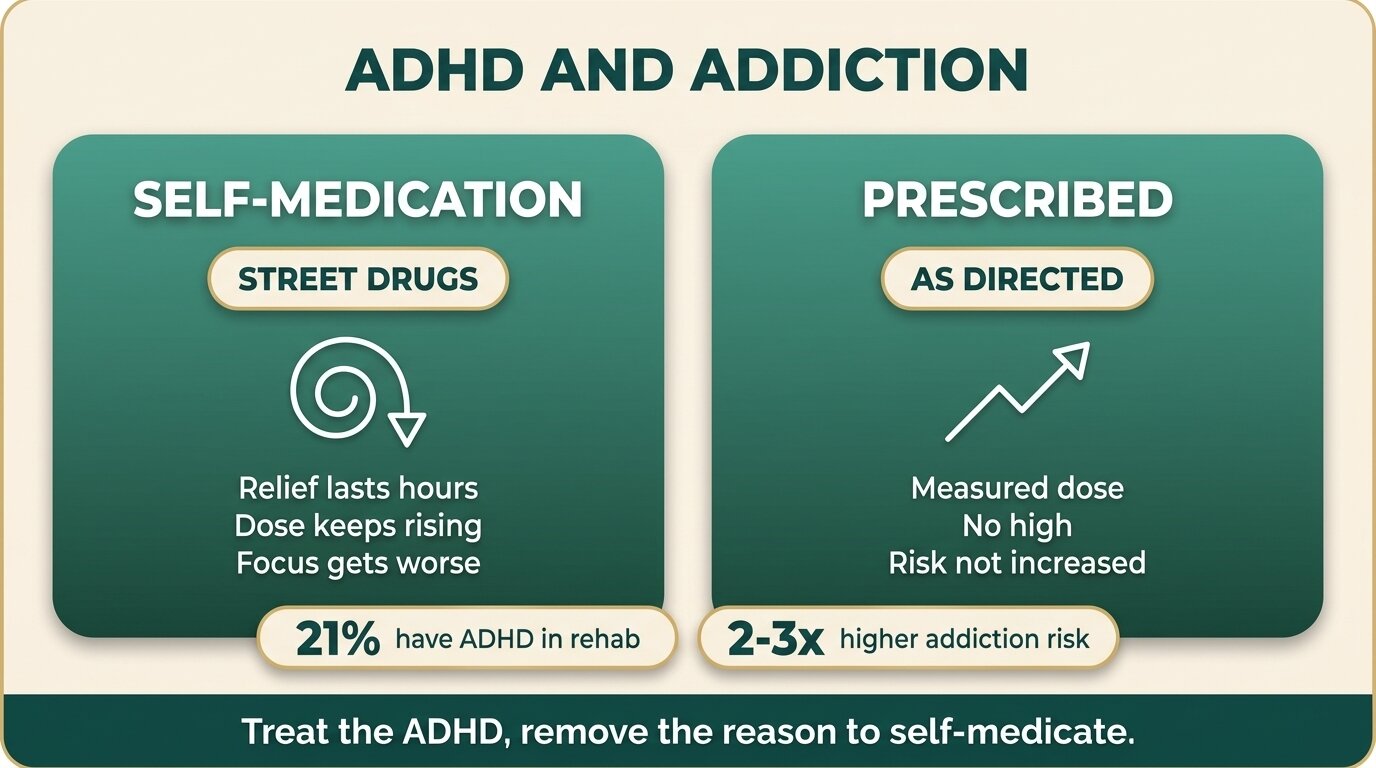
People with ADHD reach for substances because those substances quiet the noise — briefly. Alcohol slows a racing mind, cannabis blunts restlessness, cocaine and nicotine sharpen focus for an hour. But the relief is short and the rebound is worse, so the dose keeps climbing. That is why self-medication backfires: it treats a symptom for a few hours while feeding an addiction for years. About 21% of people in addiction treatment have ADHD, against 3-5% of adults generally (Rohner et al., Int J Environ Res Public Health, 2023).
Why Do People With ADHD Self-Medicate?
People with ADHD self-medicate because street drugs and alcohol temporarily patch the exact symptoms that make daily life exhausting: a restless mind, poor focus, impulsivity, and disrupted sleep. Nicotine and cocaine mimic the focus a stimulant medication would give; alcohol and cannabis dial down the internal noise. The relief feels like a solution long before anyone realises it is becoming a dependency.
The ADHD brain runs low on the reward-and-focus signalling that helps most people feel steady and motivated. That is why an untreated person often describes their first drink, joint, or line as the moment they finally felt “normal” or “switched off.” It is not weakness or thrill-seeking — it is a brain looking for the regulation it is missing. The problem is that every substance that delivers this relief also carries a rebound and an escalating dose.
Nicotine is the clearest example. Many adults with ADHD smoke or vape because nicotine briefly steadies attention and reduces restlessness, effectively imitating a stimulant medication. That short-term benefit is exactly why smoking rates are so much higher in this group, and why quitting is harder — the cigarette was doing a job.

Why Does Stimulant Self-Medication Backfire?
Self-medication backfires because the relief lasts hours while the underlying ADHD lasts a lifetime. As tolerance builds, the same amount of alcohol, cocaine, or cannabis does less, so the dose rises. The rebound — worse focus, worse sleep, worse impulsivity — is stronger than the original symptom, pulling the person back for more and turning a coping strategy into a dependency.
NIDA describes this loop directly: using substances to manage symptoms of a mental health condition “can lead to addiction and can in turn worsen the original mental illness” (NIDA, 2024). For ADHD this is especially cruel, because the impulsivity that defines the condition also makes it harder to stop after one drink, notice a habit forming, or stick to a limit.
| Substance | Short-term effect they want | Why it backfires |
|---|---|---|
| Alcohol | Quiets a racing mind, eases social anxiety | Wrecks sleep and next-day focus; impulsivity makes stopping at one drink hard |
| Cannabis | Slows restlessness, feels calming | Blunts motivation and memory; rebound restlessness drives daily use |
| Cocaine / meth | Sharp focus and energy, like a stimulant | Crash leaves focus far worse; high overdose and cardiac risk |
| Nicotine | Steadies attention, reduces fidgeting | Relief lasts minutes; heavy dependence, very hard to quit |
When someone with untreated ADHD tells me a drug made them feel “normal” for the first time, that is the diagnosis speaking, not the addiction. We assess the ADHD properly and treat it in its own right — because if you only treat the substance and leave the ADHD untouched, you have handed the person their reason to relapse.
Dr. Naranchaya Sriburapar, Ph.D.Clinical Psychologist, One Step Rehab
Is Prescribed ADHD Medication Addictive Like Street Stimulants?
No. Prescribed ADHD stimulants taken as directed do not cause addiction in people with genuine ADHD. The largest analysis of the question — 15 studies and 2,565 participants — found stimulant treatment “neither protects nor increases the risk of later substance use disorders” (Humphreys et al., 2013). A separate national study found no rise in substance problems, and if anything a protective effect over time.
The difference is dose, delivery, and diagnosis. A prescribed dose is measured, taken by mouth, and rises slowly to a steady level that supports focus without a high. Snorted cocaine or a line of meth floods the brain fast, produces euphoria, then crashes — the exact pattern that trains addiction. Treating real ADHD with the right prescription removes the reason to self-medicate; it does not add a new drug problem.
| Prescribed stimulant (as directed) | Street stimulant / self-medication | |
|---|---|---|
| Dose | Measured, titrated by a doctor | Unknown, rising as tolerance builds |
| Delivery | Oral, slow steady rise | Snorted/smoked, fast spike then crash |
| Effect sought | Steady focus, no high | Euphoria or escape |
| Long-term SUD risk | Not increased (Humphreys 2013; Chang 2014) | High; escalation and dependence |
This matters because fear of “getting hooked on ADHD meds” keeps people self-medicating with far more dangerous substances. Chang and colleagues tracked prescribed patients and found the rate of substance problems 31% lower during treatment, with the protective effect growing the longer someone stayed on medication (Chang et al., J Child Psychol Psychiatry, 2014). The evidence points the same way as the earlier meta-analysis (Humphreys et al., JAMA Psychiatry, 2013).
Wondering whether ADHD is driving your drinking or drug use? Talk to our team — we’ll give you a straight answer about assessment and treatment options.

Why Does ADHD So Often Go Undiagnosed Until Addiction Forces the Issue?
ADHD frequently goes undiagnosed until addiction brings someone into treatment because both share the same surface signs — restlessness, poor focus, impulsivity, mood swings — so the substance use gets blamed and the ADHD gets missed. Many adults reach rehab never having been assessed, having spent years managing an undiagnosed condition with alcohol or drugs instead of treatment.
Careful assessment is what separates the two. That means a structured clinical history reaching back into childhood, standardised ADHD rating scales, and screening for other conditions, done after the person is stable enough for the results to be reliable. It is a clinical psychology task, not a quick checklist — intoxication and withdrawal can imitate ADHD, and genuine ADHD can hide behind heavy substance use. Getting the distinction right decides the whole treatment plan.
This is why untreated ADHD is such a strong driver of relapse. If someone leaves treatment sober but still can’t focus, sleep, or sit with restlessness, the pull back toward the substance that used to fix all three is enormous. Treating the addiction while ignoring the ADHD leaves the original reason for using fully intact — which is the core of dual diagnosis treatment.

How Does One Step Treat ADHD and Addiction Together?
At One Step we treat ADHD and addiction as one linked problem, not two separate ones. During intake, clients who show ADHD signs are assessed properly rather than having every symptom written off as drug use. From there the treatment plan addresses both — the substance dependence and the underlying attention and impulsivity that fed it.
Our residential programme runs to a firm daily structure, which happens to be exactly what an ADHD brain needs: set wake times, group therapy blocks, physical activity, and clear routines rather than long empty stretches. You can see how the days are built in our treatment schedule, and how the therapy fits together in our structured treatment programme. Much of the therapeutic work draws on CBT and DBT — practical skills for impulse control, managing frustration, and building routines that hold once someone goes home.
Two honest points on medication. First, ADHD medication decisions are made by our visiting psychiatrist based on a proper assessment, not on request — and for someone with a stimulant history, that decision is made carefully. Second, on cost: our residential programme is around ฿280,000/month (~$8,500 USD), and any medication prescribed during your stay is billed separately — you pay for what the doctor prescribes, the same way flights and visas sit outside the programme fee. You can see the full breakdown on our pricing page.
Recovery from a dual-diagnosis pattern doesn’t end at discharge. Because untreated ADHD symptoms can resurface long after the substance is gone, our aftercare and relapse prevention plan keeps the focus on the routines and skills that stop self-medication from creeping back in.
Frequently Asked Questions
Common questions about ADHD, self-medication, and treatment.
Yes. Adults with ADHD are roughly two to three times more likely to develop a substance use disorder than the general population, and about one in five people in addiction treatment has ADHD. The impulsivity and the drive to self-medicate difficult symptoms both push the risk up.
Taken as directed for genuine ADHD, prescribed medication does not cause addiction — the largest analysis found it neither increases nor lowers substance risk overall, and some studies show a protective effect. The decision still needs a proper assessment, especially with a stimulant history, and non-stimulant options exist.
Nicotine and cocaine briefly sharpen focus and reduce restlessness, imitating the effect a prescribed stimulant would give. That short-lived relief is why smoking rates are much higher in people with ADHD — but the rebound leaves focus worse and drives escalating use.
A reliable diagnosis usually needs the person stable, because intoxication and withdrawal can mimic ADHD symptoms. Assessment combines a childhood-onset history with standardised rating scales, ideally once acute substance effects have settled, so genuine ADHD isn’t confused with drug effects.
If someone leaves treatment sober but still struggles to focus, sleep, and manage impulsivity, the substance that once relieved all three becomes tempting again. Treating the addiction without addressing the ADHD leaves the original reason for using fully intact.
Yes. We treat this as dual diagnosis — assessing the ADHD properly during intake and building both the substance recovery and the attention and impulsivity work into one plan. The structured daily routine and CBT/DBT skills are chosen partly because they suit an ADHD brain.
Written by
Naranchaya Sriburapar, Ph.D.
Dr. Naranchaya Sriburapar is a Thai Licensed Senior Clinical Psychologist with over 20 years of experience in mental health and addiction treatment. She holds a Ph.D. in Cognitive Psychology/Neuropsychology from the Univ...
Learn more about Naranchaya
Medically reviewed by
Dr. Worapakthorn Kongpesalaphun
Consultant Psychiatrist · Thai Licensed Medical Doctor · Residency in Psychiatry, Somdet Chaopraya Institute · Doctor of Medicine, Rangsit University
Dr. Worapakthorn Kongpesalaphun is a Thai Licensed Medical Doctor and Expert in Preventive Medicine (Community Mental Health) with extensive experience in addiction treatment and public health management. He holds multip...
Learn more about Dr. Worapakthorn