


Addiction Counselling At One Step Rehab
Evidence-based counselling and psychotherapy at our residential rehab near Chiang Mai — the core of our addiction treatment programme.
- CBT, MET, and Twelve Step Facilitation based on scientific research
- Individual and group therapy sessions throughout treatment
- 3 Zone Relapse Prevention Plan developed during your stay
- EMDR, mindfulness, and trauma-informed approaches available
- 12 months of aftercare included in every programme
Available Monday–Saturday, 9am–6pm (Thailand time)
Contact AdmissionsOur Approach to Addiction Counselling
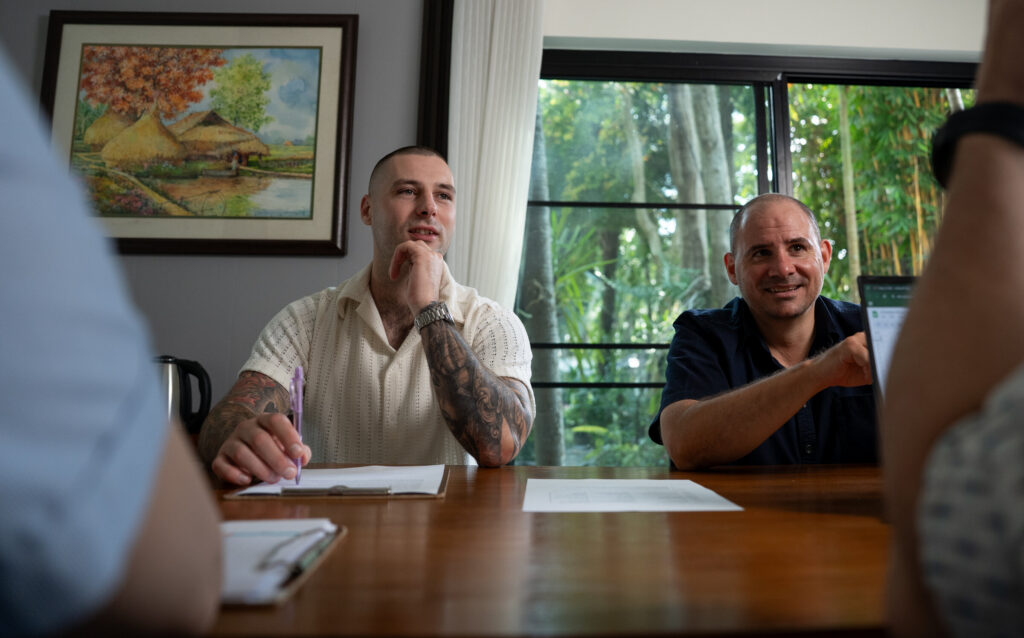
Counselling or psychotherapy is the core of any addiction treatment system. At One Step Rehab we use both group and one to one counselling. Specifically, we use the three counselling models that are deemed most effective in treating addiction according to scientific research. Those therapies are:
- CBT (Cognitive-Behavioural Therapy): Seeks to regulate dysfunctional emotional states which are characteristic of addictive disorders according to the American Society of Addiction Medicine.
- MET (Motivational Enhancement Therapy): Aims to “meet the client where they’re at”. Therapists “roll with the resistance” that addicted people often have about giving up drugs.
At One Step we deploy these counselling techniques within our own treatment system which has been developed by our founders over fifteen years. This system helps to identify your cravings, triggers, and negative self-talk, and then places them into a comprehensive 3 Zone Relapse Prevention Plan.

Our Method
At One Step our counselling approach utilizes the following specific techniques:
Mind Mapping
Mind mapping is a mixture of drawing and writing which draws out your personal experiences, relationship conflicts, emotional reactions, and the situations most closely associated with relapse or compulsive behaviour.
CBT Techniques
CBT techniques such as cost/benefit analysis, identifying cognitive distortions, and disputing negative core beliefs are integrated throughout treatment. Clients learn how automatic thought patterns influence emotions, cravings, impulsive behaviour, and self-defeating decision making.
Psycho-Education
We teach the basic neuroscience of addiction and associated disorders such as traumatic stress, anxiety, depression, and emotional dysregulation. Clients learn how addiction affects dopamine, stress systems, habit formation, reward pathways, and decision-making processes in the brain.
Identifying Value Systems & SMART Goals
A core principle of cognitive therapy is identifying personal values and building realistic, time-managed goals around them. Clients develop SMART goals focused on areas such as recovery, relationships, health, work, fitness, structure, and long-term personal development.
Boundary Workshops
Many clients entering recovery struggle with people-pleasing, rescuing behaviour, or difficulty saying no. We teach practical boundary-setting skills to help clients manage unhealthy friendships, family dynamics, romantic relationships, and high-risk social situations.
Family Dynamics & The Drama Triangle
We explore dysfunctional relationship patterns using models such as the Drama Triangle (victim, rescuer, persecutor). This helps clients recognise repetitive interpersonal dynamics that often fuel addiction, resentment, conflict, and relapse.
Codependency Workshops
Workshops examine enabling behaviours, codependency, and unhealthy emotional dependency. Clients learn how addiction can become reinforced within family and social systems, and how healthier patterns can be established.
Sharing Groups
Sharing groups use randomly assigned recovery topics and prompts to encourage honesty, emotional expression, accountability, and self-reflection. These sessions help clients develop confidence speaking openly within a recovery community.
Process Groups
Process groups focus on real-time emotional reactions, interpersonal conflicts, defensiveness, communication styles, and group dynamics. Clients receive direct peer feedback while learning to tolerate discomfort and improve emotional awareness.
Peer Feedback Sessions
Constructive peer feedback allows clients to better understand how their behaviour affects others. These sessions help reduce denial, increase self-awareness, and strengthen accountability within the treatment environment.
REBT & ABC Worksheets
Clients complete written exercises based on Albert Ellis’s REBT model, exploring how beliefs and interpretations influence emotional reactions and behaviour. These worksheets help challenge automatic thinking patterns linked to craving, anger, shame, anxiety, and relapse.
Role-Play Workshops
Role-play exercises simulate real-world relapse scenarios such as social pressure, relationship conflict, dishonesty, manipulation, or boredom. Clients practise healthier responses before encountering these situations outside treatment.
3 Zone Relapse-Prevention Planning
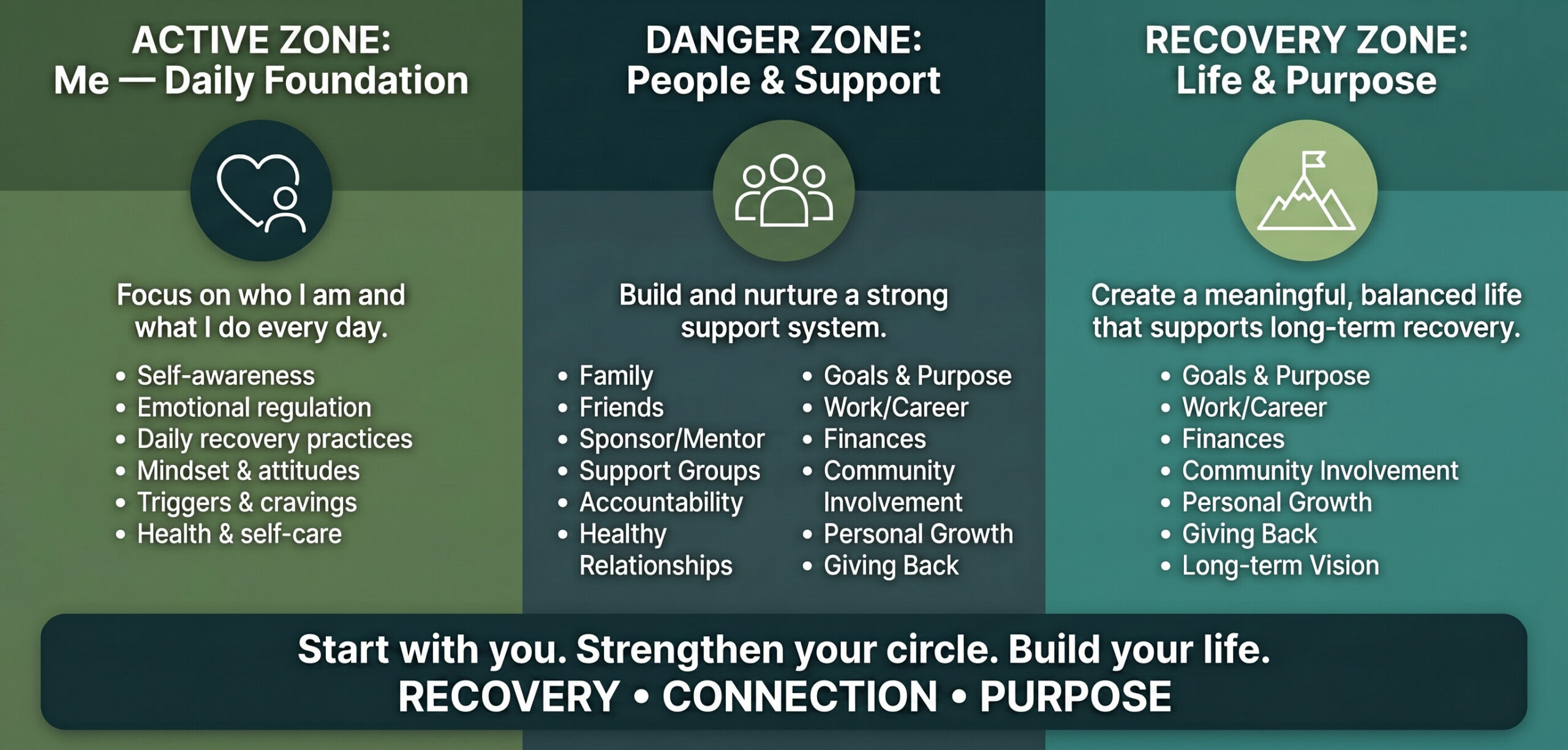
Our counselling programme is designed to help you understand why addiction developed and build the skills to stay in recovery. Call or email us for a free, confidential conversation about what treatment would look like for your situation. No pressure, no obligation.
Talk to Our Admissions TeamCognitive Behavioural Therapy For Addiction
Our treatment programme is predominantly CBT focused. CBT for addiction focuses on things called “core beliefs” (or schemas). Core beliefs are long-standing patterns of thinking and believing that develop early in life and continue to shape how a person thinks, feels, behaves, and relates — especially towards others. This includes patterns of shame, perfectionism, or attachment that might be fueling your addiction.
Using this approach we might help you explore the core beliefs that keep you addicted, by asking questions like:
- “What purpose has the drug/behaviour served for me?”
- “What does it give me that I can learn to generate naturally?”
- “What am I avoiding when I use drugs?”
- “What needs am I trying to meet?”

Other Forms of Addiction Counselling We Use
At One Step Rehab Thailand, counselling is not approached as a simple one-size-fits-all method. Different therapies are useful for different stages of recovery, personality styles, and emotional problems. Our therapists integrate evidence-based approaches depending on your needs, while always keeping the focus practical, structured, and recovery-oriented.
Eye Movement Desensitisation and Reprocessing (EMDR)
EMDR is a structured therapy originally developed for trauma and PTSD that uses guided eye movements or other forms of bilateral stimulation while processing distressing memories and emotional reactions. The approach is based on the idea that traumatic or overwhelming experiences can become “stuck” in the nervous system and continue to trigger anxiety, emotional dysregulation, or maladaptive coping behaviours such as addiction.
In addiction treatment, EMDR may be useful where unresolved trauma, shame, anxiety, or emotionally charged memories contribute to relapse or compulsive behaviour. The goal is not simply to “talk about the past”, but to reduce the emotional intensity and physiological reactivity associated with certain memories or triggers.
At One Step Rehab Thailand, EMDR-informed approaches may be integrated selectively where clinically appropriate as part of a broader relapse prevention and emotional regulation programme.
Mindfulness-Based Approaches
Mindfulness is used at One Step Rehab to help clients observe cravings, thoughts, and emotional reactions without immediately acting on them. This is often described as “urge surfing”, where cravings are experienced as temporary physiological and psychological states rather than commands that must be followed. Clients learn practical techniques for slowing impulsive reactions and increasing awareness of emotional triggers.
Breathing exercises, guided meditation, body scanning, and grounding techniques are also used to help regulate stress, improve sleep, reduce anxiety, and increase tolerance for discomfort. Rather than attempting to “eliminate” difficult emotions, mindfulness-based approaches teach clients how to experience them more calmly and with less reactive behaviour.
Motivational Interviewing (MI)
Motivational Interviewing (MI) is a collaborative counselling approach designed to strengthen a client’s internal motivation for change. Rather than confronting or arguing with resistance, MI helps clients explore ambivalence about recovery and clarify their own personal reasons for wanting to stop using drugs or alcohol.
This approach is particularly useful during early recovery, when many clients may still feel uncertain, defensive, hopeless, or emotionally conflicted about treatment. MI is closely linked to the “Stages of Change” model, which views addiction recovery as a gradual process involving different stages of readiness, relapse, and behavioural change over time.
12-Step Facilitation
At One Step Rehab Thailand, we do not force 12-step recovery on our clients. The support network of fellowships such as AA (Alcoholics Anonymous), and NA (Narcotics Anonymous), is offered as one possible strategy for maintaining recovery after treatment.
TSF introduces clients to the basic principles of peer-led recovery communities, including accountability, sponsorship, routine meeting attendance, honesty, and social support. Because 12-step meetings are free and widely available throughout the world, many clients find they provide an accessible long-term recovery structure after leaving rehab.
Frequently Asked Questions About Addiction Counselling
Common questions about counselling and therapy at One Step Rehab.
One Step Rehab Thailand primarily uses evidence-based addiction counselling approaches including Cognitive Behavioural Therapy (CBT), Motivational Interviewing (MI/MET), relapse prevention therapy, mindfulness-based approaches, and Twelve Step Facilitation (TSF). EMDR-informed approaches and mindfulness-based therapies are also available depending on the client’s needs, psychological profile, and stage of recovery.
Addiction counselling is generally more structured, practical, and relapse-focused than long-term exploratory psychotherapy. The emphasis is usually on identifying triggers, changing behaviours, improving emotional regulation, and building sustainable recovery habits.
Yes. Clients receive regular one-to-one counselling sessions twice per week alongside group therapy, peer support work, relapse prevention planning, and structured recovery activities. The reason sessions are structured this way is because clients also complete a large amount of written therapeutic work independently between sessions. One Step’s treatment programme includes a detailed recovery manual of over 120 pages containing multiple therapeutic modules.
Group therapy is considered one of the most important parts of addiction treatment because addiction often involves isolation, denial, distorted thinking, and difficulty with accountability. Group work helps clients develop honesty, emotional awareness, communication skills, and peer support.
Relapse prevention counselling helps clients identify cravings, emotional triggers, high-risk situations, thought patterns, and behaviours that increase relapse risk. Clients then develop structured strategies and recovery routines designed to reduce the likelihood of returning to substance use.
Yes, but participation is not forced. Twelve Step Facilitation (TSF) is offered as one evidence-based recovery approach alongside other counselling models. Clients are encouraged to explore different recovery tools and decide what works best for them.
Yes. Many people entering rehab experience anxiety, depression, stress dysregulation, low motivation, shame, or emotional instability alongside addiction. Addiction counselling often focuses on improving emotional regulation and coping skills as part of the recovery process.
This is extremely common in early recovery. Many clients initially feel emotionally guarded, sceptical, ashamed, or uncomfortable discussing personal issues. Therapy at One Step is approached in a practical and non-judgemental way designed to build trust gradually over time.
Yes. Counselling is integrated alongside fitness training, mindfulness-based practices, nervous-system regulation approaches, routine-building, and relapse prevention planning as part of a broader recovery programme.
At One Step Rehab Thailand, we believe trauma work should be approached using a mixture of talk therapy and somatic, body-based work. Unlike some treatment centres that focus almost exclusively on emotional disclosure or prolonged trauma processing, we believe structured approaches such as EMDR and CBT — particularly trauma-focused CBT — have a major role to play alongside body-based and somatic regulation approaches such as TRE (Trauma Release Exercises).
Contact our admissions team for a free, confidential conversation. We will talk through what treatment would look like for your specific situation, answer your questions honestly, and explain the full process from arrival to aftercare. No pressure, no obligation.
We'll respond within 24 hours