


Holistic Therapy for Addiction Recovery
Body-based therapies to regulate the nervous system, reduce stress, and support long-term recovery from addiction.
- Vipassana meditation and mindfulness training
- Yoga & Yoga Nidra for sleep and relaxation
- Sound therapy, breathwork, and singing bowls
- Integrated alongside evidence-based counselling
- Practical tools you take home after treatment
Available Monday–Saturday, 9am–6pm (Thailand time)
Contact AdmissionsBody-Based Therapies for Addiction
Many clients enter treatment in prolonged states of physiological stress commonly referred to as “fight-or-flight” activation. This may include anxiety, hypervigilance, irritability, racing thoughts, panic, and poor sleep without substances.
These conditions are the result of ongoing stress and nervous system overactivation brought about by drug and alcohol abuse, as well as life circumstances. They are difficult to treat using talk therapy alone, and this is where holistic therapies can be helpful.
Holistic therapies are also referred to as ‘body-based’ therapies, or ‘somatic’ therapies, because they work directly on the body’s nervous system. At One Step Rehab we believe that approaching stress and emotional regulation through body-based techniques is more effective than relying on talk therapy alone.
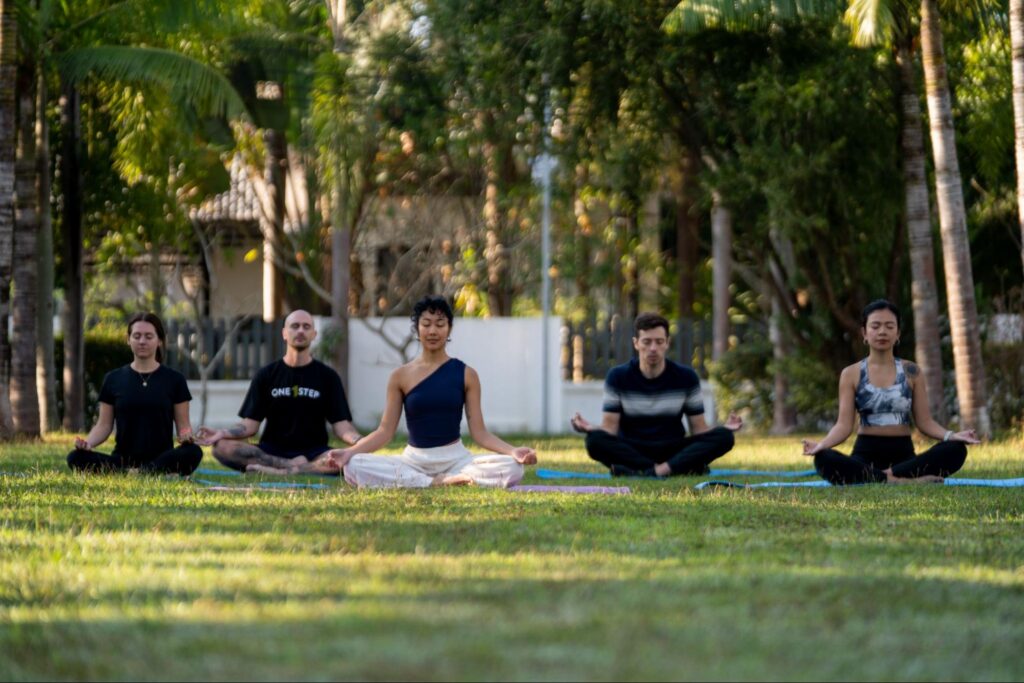
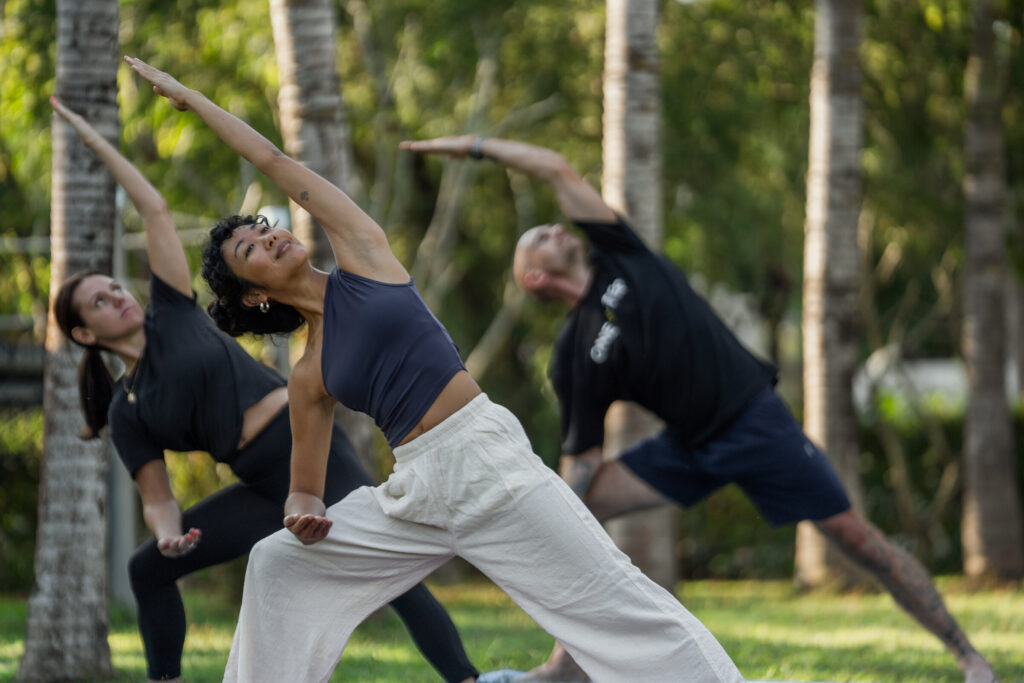
Ancient practices such as yoga and vipassana meditation are among the most well known and effective holistic therapies, but there are many others which we also use at One Step Rehab.
Holistic Practices Used at One Step
Each modality has been chosen for its specific role in combatting different aspects of the addictive disorder — from cravings and poor sleep to anxiety and emotional instability.
Vipassana Meditation
Helps overcome cravings by training awareness of internal states without reactive behaviour.
Yoga & Yoga Nidra
Improves sleep quality, repairs posture, and reduces nervous-system strain from prolonged substance use.
Sound Therapy
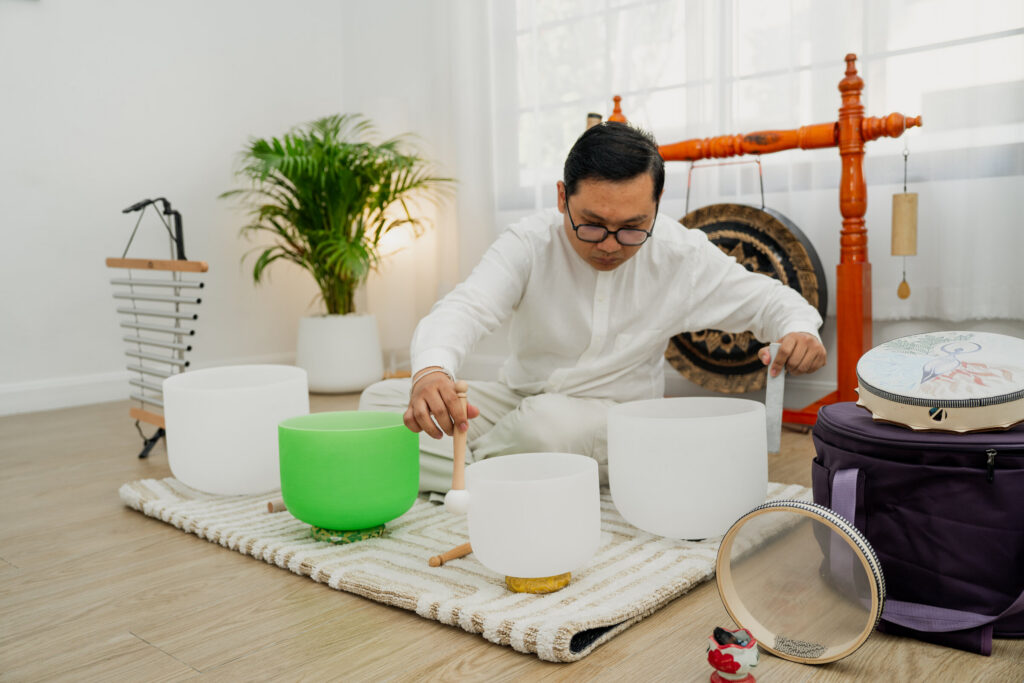
Singing bowls and guided sound meditation to calm mental overactivity and improve relaxation.
Metta Sharing
Cultivates compassion and reduces chronic self-criticism, shame, and interpersonal conflict.
Singing & Mantra
Improves mood and breathing through rhythmic vocalisation, attentional focus, and group synchronisation.
Breathwork
Regulated breathing techniques to reduce autonomic stress activation and improve emotional stability.
Is Holistic Therapy Evidence Based?
Research into body-based holistic practices like mindfulness, meditation, yoga, and sound therapy, suggests they may help reduce stress arousal and improve emotional regulation by calming the nervous system and increasing awareness of internal states.
For example, the National Institute of Health found that mindfulness-based relapse prevention approaches may reduce substance use, craving, and relapse risk by improving emotional regulation and stress tolerance (Marlatt, 2009).
For this reason, body-based approaches are increasingly incorporated into addiction treatment programmes in drug rehabs, and Thailand rehabs in particular.
Regulating the Nervous System in Recovery
The autonomic nervous system regulates bodily functions such as heart rate, breathing, stress responses, and arousal. Chronic addiction places this system under repeated strain through cycles of intoxication, withdrawal, craving, poor sleep, stress, and emotional instability.
Over time, many addicted people become highly reactive to stress and discomfort, even from relatively minor emotional triggers, leading to anxiety, agitation, impulsive thinking or cravings.
At One Step, we have developed a highly targeted holistic therapy routine within our treatment programme. Each modality we have chosen plays a particular role in combatting different aspects of the addictive disorder.
- Mindfulness meditation – helps overcome cravings
- Yoga Nidra – improves sleep quality
- Singing and mantra practice – improves mood and breathing
- Sound therapy – improves relaxation and stress levels
Our programme combines evidence-based counselling with body-based holistic therapies, structured fitness training, and good nutrition. Contact us for a free, confidential conversation about treatment.
Speak to AdmissionsHolistic Therapies at One Step
All modalities are integrated alongside evidence-based counselling and onsite fitness training. They have been developed by our team to be accessible and easy to understand, so you can take them home as part of your ongoing recovery skill set.
Yoga Nidra
Yoga Nidra comes from older yogic traditions in India and is sometimes translated as “yogic sleep,” although the goal is not actually sleep itself. The underlying philosophy is that people normally live in a state of constant mental identification — reacting automatically to thoughts, emotions, cravings, anxieties, and bodily sensations without much awareness or control.
Yoga Nidra attempts to interrupt this process by guiding attention systematically through the body and mind while the person remains in a deeply relaxed but conscious state. In practical terms, the technique usually involves lying still while being guided through:
- Body scanning
- Breath awareness
- Sensory awareness
- Visualisation
- Observation of thoughts and sensations without reacting
The theory is that this deep state of relaxation reduces autonomic nervous system arousal and shifts the body away from chronic stress activation. This is good for people in early recovery who struggle with overstimulation, poor sleep, and irritability.
Eye Movement Stress Reduction (EMSR)
EMSR (Eye Movement Stress Reduction) is essentially a simplified, lower-intensity adaptation of EMDR (Eye Movement Desensitization Reprogramming). The basic idea comes from observations that rhythmic bilateral stimulation — particularly guided eye movements — may help reduce autonomic nervous system activation and emotional intensity.
During EMSR exercises, a person typically follows a moving object, finger, light, or guided visual pattern while focusing on breathing, bodily sensations, or stressful thoughts without deeply analysing them. The emphasis is not on “reliving trauma”, or uncovering hidden memories. Instead, the goal is:
- Down-regulating stress
- Interrupting spiralling emotional states
- Reducing hyperarousal
- Improving emotional regulation
- Increasing tolerance for uncomfortable internal states
From a theoretical perspective, EMSR sits closer to somatic and nervous-system regulation approaches than classical talk therapy. It works on the assumption that stress and craving are not purely cognitive events, but also physiological states involving muscle tension, autonomic activation, visual attention systems, breathing patterns, and conditioned bodily responses.
Metta Sharing
Metta is a contemplative practice originating from early Buddhist traditions, often translated as “loving-kindness” or “benevolent goodwill.” Traditionally, the practice involves intentionally directing phrases of compassion, safety, forgiveness, and goodwill towards oneself and others.
In addiction treatment, this is particularly relevant because many addicted people experience chronic self-criticism, resentment, isolation, guilt, interpersonal conflict, and difficulty forming stable emotional connections. Metta practices attempt to interrupt this pattern by deliberately cultivating pro-social emotional states such as compassion, gratitude, patience, forgiveness, and empathy.
In practical sessions, clients may be guided through structured reflective exercises where they silently repeat phrases wishing safety, peace, strength, or wellbeing towards:
- Themselves
- Supportive people
- Neutral people
- Difficult relationships
- Eventually broader groups of people
The aim is not forced positivity or denial of difficult emotions. Instead, the practice helps clients observe hostility, shame, resentment, or emotional defensiveness without becoming completely identified with them.
Singing & Mantra Practice
Chanting, singing, and mantra-based practices have been used for centuries within contemplative traditions as methods for regulating attention, breathing, emotion, and group connection. Modern research has also explored how repetitive vocalisation, rhythmic breathing, and coordinated group activity may help reduce stress arousal and improve emotional regulation.
In addiction recovery, these practices can be useful because compulsive drug and alcohol use is often accompanied by racing thoughts, anxiety, and social isolation. Singing and mantra work create structured rhythm, controlled breathing, attentional focus, and social synchronisation, all of which may help interrupt compulsive mental loops and calm physiological stress responses.
In practical sessions at One Step Rehab, clients may engage in simple guided chanting, breath-linked vocal repetition, or group singing exercises designed to promote focus and relaxation rather than performance. The repetitive nature of mantra practice can also help train sustained attention and a state of flow, particularly during periods of craving, agitation, or emotional overwhelm.
Mindful Walking Meditation
Walking meditation is a mindfulness practice originating from Buddhist contemplative traditions like the vipassana tradition, which is native to Thailand. In this system, attention is deliberately focused on movement, breathing, posture, and sensory awareness while walking slowly and consciously.
Unlike seated meditation, walking meditation combines mindfulness with physical movement, which often makes it more accessible for people who struggle with restlessness or mental overactivity.
In addiction recovery, this is particularly relevant because many addicted people find silence and stillness uncomfortable, especially during early sobriety when anxiety, agitation, boredom, and racing thoughts are common.
At One Step Rehab Thailand, walking meditation is used as a more accessible form of vipassana meditation, in a practical and grounded way to help clients develop greater awareness of their internal states.
Sound Therapy
Sound therapy refers to the use of repetitive sound, vibration, rhythm, and focused listening exercises to promote relaxation and regulate stress responses. Practices may involve singing bowls, gongs, chimes, ambient frequencies, guided sound meditation, or rhythmic auditory patterns designed to calm mental overactivity and support nervous-system regulation.
While sound therapy is not considered a stand-alone addiction treatment, it may support relaxation, stress management, sleep quality, and emotional stabilisation when integrated into a broader recovery programme.
At One Step Rehab Thailand, sound therapy is used as a practical supportive tool to help clients settle mental overactivity, regulate stress, and develop healthier methods of relaxation without drugs or alcohol.
Frequently Asked Questions
Common questions about holistic therapy at One Step Rehab.
No. Holistic therapies are optional and designed to complement the core counselling and recovery programme.
No. While some practices have historical roots in Buddhist or yogic traditions, they are used at One Step in a practical, secular, and recovery-focused way.
Research into mindfulness-based relapse prevention suggests that mindfulness practices may help reduce craving, improve emotional regulation, lower stress, and reduce impulsive behavioural responding.
No. Holistic therapies are used alongside evidence-based counselling, relapse prevention planning, fitness training, peer support, and structured routine.
This is extremely common in early recovery. Many clients initially find mindfulness difficult due to anxiety, agitation, racing thoughts, or restlessness. Practices such as walking meditation, Yoga Nidra, and guided exercises are often easier starting points.
Yes. One aim of the programme is to help clients develop practical recovery tools they can continue using independently after leaving rehab.
Contact our admissions team for a free, confidential conversation about treatment at One Step. We will explain the full programme including counselling, holistic therapy, fitness, nutrition, and aftercare. No pressure, no obligation.
We’ll respond within 24 hours