

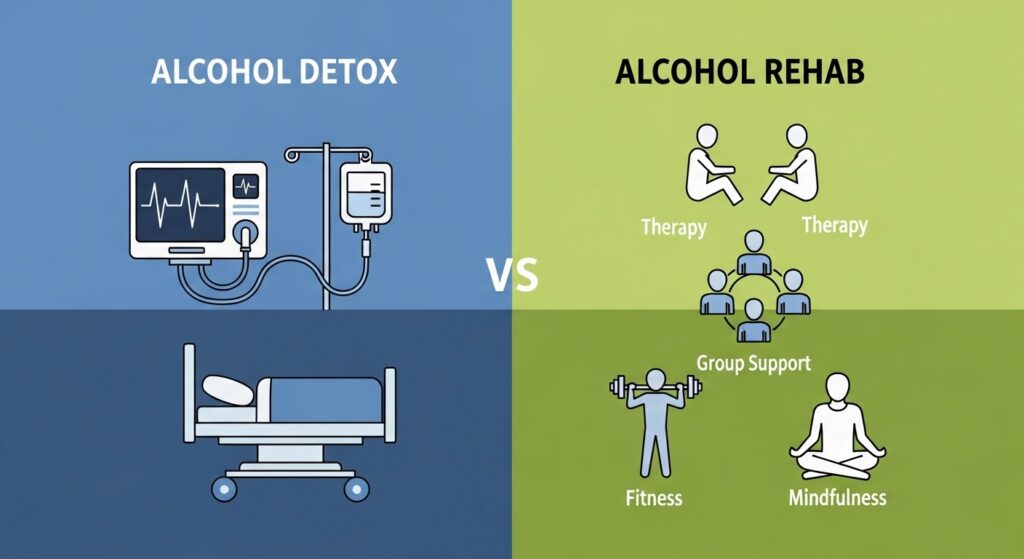
Understanding the distinction between alcohol detox and rehab is essential for anyone seeking effective treatment for alcohol use disorder. While these terms are often used together, they serve separate roles in the recovery journey.
This page explores the critical differences between detox and rehab, clarifies what each process involves, and highlights the importance of a comprehensive approach to alcohol treatment. By recognizing how detox and rehab work together, individuals and their loved ones can make informed decisions and take confident steps towards lasting recovery and well-being.
Brief Overview
Understanding the difference between alcohol detox and rehab is essential for achieving lasting recovery. Detox is a medical procedure that offers a safe, medically supervised environment to manage withdrawal symptoms and establish a foundation for sobriety. Rehab is where the therapy happens. It addresses the psychological, emotional, and behavioral roots of addiction.
At One Step Rehab in Thailand, comprehensive programs integrate both detox and rehab through an interdisciplinary approach that includes therapy, fitness, mindfulness, and the genuine Thai hospitality that all Thai rehabs are known for. Our aim is to guide clients through every stage from detox to aftercare. This all-encompassing approach fosters resilience, well-being, and sustainable change for individuals seeking freedom from alcohol dependency.
Key Highlights
- Detox and rehab serve distinct roles; detox manages withdrawal safely, while rehab tackles root causes for lasting recovery.
- Medical supervision during detox is crucial for safety, especially with severe withdrawal symptoms or long-term alcohol use.
- Comprehensive rehab at One Step integrates therapy, fitness, and mindfulness for holistic healing and relapse prevention.
- Thai hospitality and mindfulness enhance your treatment, creating a supportive environment for sustained sobriety and well-being.
- Choosing the right program depends on your individual needs and utilizes professional assessment procedures to ensure the best foundation for recovery.
Understanding the Differences Between Detox and Rehab for Alcohol Recovery
For those facing alcohol addiction, truly grasping the differences between detox and rehab can empower individuals and families to make informed decisions. Both approaches are vital parts of effective alcohol addiction treatment, yet they serve different functions.
Detox provides a medically supervised environment to manage withdrawal symptoms and establish a foundation of stability. If it is done well, the process can be relatively easy, contrary to many people’s expectations. Rehab, on the other hand, focuses on comprehensive, long-term support and therapy for sustained sobriety. Without proper rehab (ongoing psychological therapy), relapse is likely.
By understanding each phase of care, including inpatient and outpatient options, as well as the range of programs available, you’ll be able to approach recovery with clarity, confidence, and a commitment to lasting change on your journey with One Step Rehab.
How the Detox Process Prepares You for Long-Term Rehab Success
Alcohol detox is the cornerstone of effective addiction treatment, serving as a critical first step for individuals seeking sustainable sobriety. The main goal of the detox process is to manage alcohol withdrawal safely, an often daunting experience characterized by a range of withdrawal symptoms, including anxiety, nausea, tremors, and, in severe cases, life-threatening complications.
Therefore, you should seek detox at a reputable detox center or treatment center that provides professional withdrawal management to ensure both physical safety and psychological well-being, restoring the body’s equilibrium after prolonged alcohol abuse. Through individualized care, the detox process paves the way for lasting recovery by minimizing the health risks associated with alcohol withdrawal, allowing clients to engage more deeply in subsequent treatment programs. The role of a structured detox process extends beyond simply eliminating alcohol from the system; it’s about creating the optimal conditions for the next stage of recovery, rehab.
While medical oversight at a detox center ensures that withdrawal symptoms are promptly addressed, greatly reducing discomfort and potential complications, it is extremely important to be medically assessed to establish the precise level of care you need. For example, severe alcohol dependence can cause life-threatening seizures and problems with circulation, airways, and breathing.
Therefore, any center claiming to provide this level of care should prove that it has the following type of equipment to cater to such eventualities:
- Oxygen + masks
- Bag-valve mask (BVM)
- Suction device
- AED/defibrillator
- BP cuff + pulse oximeter
- IV cannulas + fluids (normal saline)
At One Step Rehab, we recognize that early support is crucial. Our staff delivers empathetic, continuous care so that clients can focus on healing, not the distress of unmanaged withdrawal. With careful monitoring and evidence-based protocols, detox provides a solid physiological and psychological base from which addiction rehab can be more successful.
Detox and rehab work in tandem to offer a continuum of care that addresses the various stages and needs of addiction recovery. While the detox phase resolves immediate physical dependencies and stabilizes individuals experiencing alcohol withdrawal, it doesn’t tackle the deeper emotional, behavioral, and psychological components driving substance abuse. That’s where rehab comes in.
That’s why transitioning directly from detox into a comprehensive rehab program, where therapy, group support, and lifestyle changes are prioritized, significantly improves outcomes. Detox only manages withdrawal symptoms (seizures, vital signs, and agitation). Rehab provides psychological, behavioral, and social interventions necessary for long-term recovery. Without rehab, relapse rates after detox alone are extremely high, often 60–80% within weeks.
At One Step Rehab, our seamless transition from detox to addiction rehab allows clients to maximize their motivation and begin inpatient or outpatient treatment without delay, ensuring momentum isn’t lost during this critical window for change.
Preparing for rehab through a structured detox helps clients approach therapy with clarity, reduced cravings, and enhanced readiness to engage in the work required for enduring recovery. The lessons learned and coping mechanisms developed during detox set a precedent for greater involvement in therapy and long-term addiction management.
Recovery isn’t just about ceasing alcohol use; it’s about cultivating a life where sobriety is sustainable and rewarding. By understanding the invaluable function of detox at the outset, individuals can better appreciate how each element, detox and rehab, works to build a resilient foundation for ongoing recovery, underscoring both their unique roles and irreplaceable synergy in the treatment of alcohol addiction.
With comprehensive support, evidence-based care, and a compassionate environment, One Step Rehab in Chiang Mai ensures that each step, from detox to rehab, is tailored to your unique clinical presentation and history.
Alcohol Detox: Safely Navigating Withdrawal Symptoms

Facing alcohol addiction can be overwhelming, especially when considering the challenges of withdrawal symptoms and the uncertainty of the detox process. That’s why you need an experienced rehab management team.
Alcohol detox is designed to safeguard clients as they stop drinking, prioritizing comfort, safety, and effective withdrawal management. But accessing the right addiction treatment center is crucial.
With the proper support and evidence-based care, individuals not only reduce the discomfort of alcohol withdrawal but also set the groundwork for rehab and sustained sobriety in a comprehensive addiction treatment program.
When to Seek Medical Alcohol Detox for Effective and Comfortable Care
Alcohol detox is the first and often most physically challenging stage in the journey to recovery, especially for individuals who’ve been living with long-term alcohol abuse. The severity of your dependence is determined not just by how much you drink, but also by how long.
Determining the right time to seek medical alcohol detox is crucial for effective and comfortable care. While some may attempt to manage withdrawal symptoms independently, self-detox isn’t just uncomfortable but can also be dangerous, especially if a person has a history of heavy use or additional health complications.
Symptoms such as severe anxiety, tremors, hallucinations, seizures, and delirium tremens (DTs) aren’t just distressing; they’re potentially life-threatening. At One Step, we stress that any moderate to severe signs of alcohol withdrawal or a personal history of complicated detoxification from alcohol or other substances warrant immediate evaluation in a medical setting.
Recognizing the signs early and opting for professional support enables you to access medication-assisted withdrawal management. This approach reduces the risk of physical complications and provides comfort care that eases the most severe symptoms.
In a dedicated detox center, such as the one provided at One Step Rehab in Chiang Mai, the detox process is tailored to each individual’s unique needs. Our multidisciplinary team uses evidence-based treatment programs, incorporating both medical protocols and therapeutic interventions, ensuring a seamless continuum from detox to rehab. Early intervention also supports psychological stability, easing anxiety and confusion to help clients transition smoothly into addiction rehab and address the root causes of substance use with a sober, clear mind.
Medical alcohol detox doesn’t just focus on alleviating physical withdrawal; comprehensive care encompasses emotional support, nutritional stabilization, and readiness planning for longer-term therapy. An individualized addiction treatment program integrates these modalities, while 24/7 monitoring ensures safety at every step. For some, outpatient detox might be possible, but those with severe symptoms almost always benefit from inpatient care, where medical staff and therapists can swiftly adjust treatment should withdrawal symptoms escalate.
Alcohol detox at a facility like One Step Rehab emphasizes the importance of holistic, client-centered treatment. We understand that effective withdrawal management means not only averting medical crises but also fostering hope and motivation during this shift toward recovery. Having fun and generating a feeling of hope is really crucial, which is why we incorporate games, outings, communal meals, and other recreational activities into the program. Some of these, such as communal eating and games, can be accessed during detox. Others (excursions and outings) will have to wait until you’re in the rehab phase.
Our unique combination of comfort care, therapeutic engagement, and cultural hospitality provides clients with the resilience to move confidently through detox and into subsequent rehab programs. This environment creates a safe space to begin exploring therapy and building coping strategies, including building friendship and support groups, which are essential as you progress from withdrawal management into the full scope of alcohol addiction treatment.
With ongoing support and access to a reputable rehab center like ours, you have every chance of securing a fulfilling, sustained recovery.
Comprehensive Alcohol Rehab: Addressing the Root Causes of Addiction

After safely navigating detox and achieving initial stability, it’s essential to confront the deeper reasons behind alcohol addiction. A targeted alcohol rehab program not only supports continued recovery but also unravels the root causes of substance abuse, ensuring a more sustained path to sobriety.
At One Step Rehab, our comprehensive addiction treatment model empowers clients by combining proven therapies for alcohol dependence, such as CBT and TSF, with holistic wellness and ongoing support. Our treatment center in Chiang Mai offers individualized care and will address the complex interplay between addiction, mental health, and lifestyle for resilient alcohol rehabilitation (known as ‘having a program’) and long-term wellness.
Treatment Programs at One Step: Integrating Therapy, Fitness, and Mindfulness
At One Step Rehab, our approach to alcohol rehab centers on the understanding that addiction is deeply multifaceted. Alcohol addiction doesn’t simply result from repeated use of a substance; its roots often lie in unresolved trauma, chronic stress, mental health issues, or environmental triggers. To truly help our clients achieve lasting recovery, our rehab program is crafted to address these underlying factors through a comprehensive, multi-dimensional treatment program that goes beyond detox and rehab basics.
Therapy is at the heart of our alcohol addiction treatment model. Through individual and group therapy sessions, clients gain the skills to understand patterns of alcohol abuse and develop healthy coping mechanisms.
Recognizing that the withdrawal symptoms experienced during the detox process often signal deeper emotional imbalances, our therapists work closely with each client to personalize care, targeting the treatment of both substance abuse and co-occurring mental health conditions.
Cognitive Behavioral Therapy (CBT) is a cornerstone of our rehab center’s methodology, teaching practical ways to challenge unhelpful thoughts. Irrational thought patterns (known as NATS—‘negative automatic thoughts’) are challenged by both group therapy and one-to-one therapy and are an essential ingredient in bringing cravings and triggers under control.
Yet, at One Step Rehab, effective addiction treatment is never limited to talk therapy alone. Addressing physical health and promoting self-efficacy are integral to sustained sobriety. Our comprehensive treatment incorporates the most advanced fitness facilities of any rehab in Thailand; our unique fitness boot camp is designed to boost endorphin levels, address lethargy left by alcohol abuse, and offer structure during the recovery process. These physical activities, which include Muay Thai boxing, tennis, swimming, pickleball, cycling in the countryside, and even treks to the local waterfall, paired with a tailored rehab program, help clients reconnect with their bodies and rediscover a sense of motivation that complements the psychological aspects of addiction treatment.
Research consistently shows that exercise is both a deterrent to cravings and a powerful mood stabilizer, which is why fitness remains a consistent component of our recovery solutions for alcohol abuse and general substance misuse.
Mindfulness practices, rooted in Chiang Mai’s serene Buddhist culture, further differentiate our treatment programs. Integrating guided meditation, yoga, and mindfulness training, One Step’s program empowers clients to remain present and self-aware as they progress through alcohol rehab and the treatment of addiction. Our meditation team incorporates sound therapy, progressive relaxation, and breathing techniques daily to restore your nervous system function post alcohol detox.
Common modalities they use are:
- Yoga Nidra
- Eye movement stress reduction
- Metta sharing
- Singing & Mantra practice
- Mindful walking meditation
- Ice bath
Mindfulness is especially effective in preventing relapse by fostering emotional regulation and enhancing each client’s ability to respond constructively to stress or triggers that once drove alcohol use. At our treatment center, learning mindfulness from Thai Buddhist monks transforms recovery into a holistic journey and an experience you will remember, addressing the root causes of substance abuse while inspiring resilience and renewed self-worth.
Finally, ongoing support and aftercare planning ensure the transition from inpatient to outpatient care, or back home, runs smoothly. Our addiction rehab programs don’t end at discharge; instead, we provide each client with access to therapy, recovery groups, and relapse-prevention resources tailored to their personal needs. We offer an industry-unique 12 months of free online aftercare, available every Saturday.
By integrating therapy, fitness, and mindfulness, One Step Rehab ensures that treatment isn’t just about eliminating alcohol use; it’s about building a sustainable, meaningful life in recovery. Clients leave with not only sobriety but also with practical tools to address both the physical impact of alcohol withdrawal and the psychological drivers of addiction. Our commitment to individualized care, comprehensive support, and exceptional hospitality makes One Step Rehab a leader in innovative, effective alcohol rehabilitation in Thailand and beyond.
Exploring Detox and Rehab: Do You Need Both or Just Rehab?

When considering addiction treatment for alcohol, it’s critical to understand the unique roles and synergy between detox and rehab. Often, clients and families find themselves asking, “Do you need both, or is rehab alone enough? ”
From the perspective of a counselor at One Step Rehab, it’s important to emphasize that the answer truly depends on your individual needs, history of alcohol use, and the severity of withdrawal symptoms or alcohol withdrawal you may be at risk of experiencing. Both detox and rehab are fundamentally different stages in a comprehensive treatment program, but are deeply interconnected in fostering sustainable recovery and lasting sobriety.
Detox addresses the immediate, physical dependency on alcohol. If you’ve been drinking heavily, the body adapts to the presence of alcohol, and stopping abruptly leads to challenging withdrawal symptoms. Medically supervised alcohol detox at a detox center or treatment center like One Step Rehab ensures that you’re supported through the detox process, minimizing the health risks of alcohol withdrawal and preparing you physically and mentally for the next phase of addiction treatment.
However, as we have established, detox alone doesn’t address the psychological, behavioral, and emotional root causes of addiction or the patterns of substance abuse that drive continued drinking. This is where rehab, or a comprehensive rehab program, becomes essential.
Rehab goes beyond physical stabilization and tackles the complexities of alcohol addiction through therapy, structured daily routines, and holistic care. The core of effective addiction rehab is evidence-based therapy, like Cognitive Behavioural Therapy (CBT), group sessions, fitness, and mindfulness meditation.
Whether you begin your recovery journey in an inpatient or outpatient setting, ongoing care at a reputable alcohol rehab or rehab center supports your mental, emotional, and social healing well beyond detox.
At One Step Rehab in Chiang Mai, we understand that not every client requires a medically supervised alcohol detox. Some individuals, particularly those with milder patterns of use or those who have already undergone detox elsewhere, may be ready to enter a rehab program directly.
However, for most people with a history of prolonged alcohol abuse or severe substance dependence, detox and rehab as a combined approach offer the safest and most comprehensive pathway. Our treatment programs are individually tailored, guiding you from detox through inpatient therapy and into ongoing aftercare, ensuring every stage of the recovery process is coordinated for your success.
The question, do you need both, or just rehab, should always be answered after a thorough assessment by clinical professionals. At One Step Rehab, we prioritize individualized treatment, assessing your unique history, severity of alcohol addiction, co-occurring mental and physical health needs, and risk of withdrawal symptoms. Many find that receiving care for both the physical aspects in a detox center and the psychological components in a rehab program is what delivers lasting change and genuine freedom from alcohol and substance abuse.
Ultimately, integrating detox and rehab creates the strongest foundation for long-term recovery, allowing you to move forward with confidence, support, and a renewed sense of hope.
| Stage | Primary Focus | Key Activities | Role in Recovery |
|---|---|---|---|
| Detox | Physical Stabilization | Medical monitoring, withdrawal management, symptom relief | Provides a safe environment to clear alcohol from the body and prepare for further treatment |
| Rehab | Long-Term Healing | Therapy, education, skill-building, relapse prevention | Addresses psychological, emotional, and behavioral aspects to support lasting recovery |
| Synergy | Continuous Care | Transition planning, coordinated treatment, support systems | Ensures ongoing support and a seamless move from detox to rehab for sustained progress |
| Comprehensive Recovery | Holistic Approach | Integration of medical and therapeutic interventions | Combines both stages for the best chance at overcoming alcohol addiction |
This table provides a clear overview of how detox and rehab each contribute to a comprehensive alcohol recovery journey.
Alcohol Rehab in Thailand: Cultural Insights and Unique Treatment Approaches

Alcohol rehab in Thailand offers an inspiring blend of traditional wisdom and pioneering treatment approaches, attracting individuals from around the world seeking lasting recovery in a supportive environment. The country’s rich culture and spiritual heritage play a profound role in shaping addiction treatment, with unique approaches rooted in mindfulness and heartfelt Thai hospitality.
Clients at One Step Rehab benefit from these cultural insights, experiencing a treatment program that’s not only evidence-based but also deeply attentive to emotional and psychological needs. This intersection of culture, therapy, and innovative care sets Thai rehab centers apart, ensuring alcohol addiction is addressed holistically for enduring sobriety and health.
The Role of Thai Hospitality and Mindfulness in Alcohol Treatment
Thai hospitality isn’t just about courteous smiles and attentive service; it’s a deeply ingrained philosophy influencing every aspect of addiction treatment at leading rehab centers in Thailand.
At One Step Rehab, the principle of “welcome as family” creates a compassionate space where clients feel supported, valued, and safe as they confront the challenges of alcohol addiction. This unique approach ensures that every interaction, from the initial moment of arrival through each phase of therapy and care, is infused with genuine warmth. Thai hospitality forms the emotional backbone of our rehab program, allowing those in treatment to let their guard down, share openly, and trust in the recovery process.
This environment of acceptance becomes particularly important during vulnerable periods, such as alcohol detox, where clients may be grappling with disorientation, withdrawal symptoms, or profound anxiety. Dedicated staff not only attend to physical needs but also provide the emotional support essential for motivating individuals through the discomfort of detox and rehab. This foundation of kindness dovetails seamlessly with Thailand’s mindfulness practices, a cornerstone of the country’s spiritual tradition, which are woven throughout One Step’s treatment programs.
Mindfulness, as integrated into our alcohol rehab program, isn’t a vague concept but an actionable skill taught through structured meditation sessions, breathing exercises, and daily routines guided by experienced therapists and, occasionally, local Buddhist monks.
The therapeutic impact of mindfulness in alcohol treatment is vast. We see firsthand how sustained mindfulness practice transforms clients’ relationships with their thoughts, emotions, and cravings. Practicing mindfulness allows individuals to observe distressing urges, negative self-talk, and emotional reactivity with greater clarity and acceptance, key skills for breaking cycles of alcohol abuse.
Mindfulness not only supports acute moments of alcohol withdrawal but also changes the brain. Multiple studies have shown that even an hour of meditation a day over as little as 8 weeks can have pronounced effects on brain areas like the hippocampus and amygdala, which control fear and other negative emotions, as well as calm the parasympathetic nervous system, which is overactive after prolonged alcohol abuse.
At One Step Rehab, this integration of cultural insights and unique approaches isn’t treated as supplementary but is fully embedded within every aspect of our treatment center. Our comprehensive addiction treatment model includes both Western therapy modalities, such as Cognitive Behavioural Therapy (CBT), and holistic, culturally informed activities that foster lifelong well-being.
Clients are encouraged to participate in mindfulness-based therapy, yoga, group meditation, and even temple visits, making their rehab experience truly transformative. The tranquil setting of northern Thailand, immersion in local culture, and access to world-class amenities create conditions that amplify healing while reducing the stressors and triggers often found at home.
For those navigating the journey from alcohol detox to comprehensive rehab, the harmonious interplay of Thai hospitality, mindfulness, and robust clinical care at One Step lays the groundwork for lasting change.
At One Step Rehab, you’re not just treated for substance abuse; you’re welcomed, supported, and inspired to rediscover your potential on the path to enduring sobriety. The atmosphere is one of nonjudgmental communication from counselors and support staff, inspired by the Thai value of “Nam Jai” (kindness and generosity).
Continue by outlining some specific ways Thai hospitality and mindfulness are experienced during treatment at One Step Rehab:
- Warm personal greetings and attentive care from staff upon arrival, creating an immediate sense of comfort and welcome.
- Integration of traditional Thai wellness practices, such as guided Buddhist meditation sessions and mindfulness exercises.
- Healthy Thai meals prepared with attention to individual dietary needs, fostering nourishment and healing.
- Calm, soothing treatment spaces featuring Thai design aesthetics to promote relaxation and peace of mind.
- Daily opportunities for reflection and gratitude, rooted in Thai cultural philosophy and mindfulness.
- Supportive, non-judgmental communication from counselors and support staff, inspired by the Thai value of “Nam Jai” (kindness and generosity).
- Encouragement of slow, mindful living and present-moment awareness throughout daily routines and group activities.
Each of these points highlights a facet of One Step Rehab’s nurturing, holistic approach to alcohol recovery.
Practical Tips for Choosing Between Detox and Alcohol Rehab
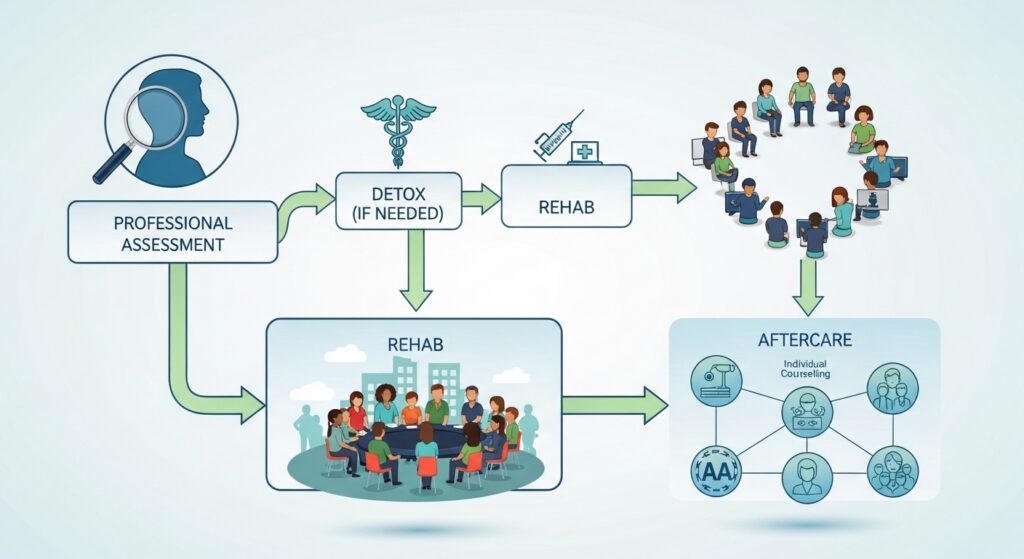
When you’re considering recovery from alcohol addiction, the decision between detox and alcohol rehab isn’t always clear-cut. To make an effective choice, start by honestly assessing the nature and severity of your substance use.
Tip #1: Symptom Evaluation.
If you’ve experienced withdrawal symptoms when stopping alcohol, such as tremors, anxiety, or more serious complications, a medically supervised alcohol detox should be your first priority. A trusted detox center will ensure that the detox process addresses both your physical dependency and safety, laying a secure foundation for ongoing addiction treatment and long-term sobriety.
Tip #2: Inpatient or Outpatient.
Next, consider whether you need inpatient or outpatient care. Inpatient addiction rehab programs, like those offered at One Step Rehab in Chiang Mai, provide structured, comprehensive care around the clock, which is critical if you require intensive support or face severe alcohol withdrawal symptoms. Outpatient treatment programs can be appropriate for those with a safe home environment and less severe addiction, though the risk of relapse due to unaddressed triggers should always be evaluated with professional guidance.
Tip #3: Treatment Program.
Another key factor involves the comprehensive nature of the treatment program. While detox is essential for managing the withdrawal process, true recovery from alcohol addiction goes far beyond clearing the substance from your body. Effective alcohol rehabilitation integrates therapy, such as cognitive-behavioral approaches, mindfulness, and group support, into a cohesive rehab program that addresses the psychological, emotional, and behavioral root causes of addiction.
At One Step Rehab, our approach to addiction treatment combines evidence-based therapy, physical fitness, mindfulness meditation, and principles of the 12-Steps to provide lasting support and strategies for sustained sobriety. Be certain any rehab center you consider offers this full range of care, with qualified professionals who treat both substance abuse and any co-occurring mental health issues.
Tip #4: Verify Credentials.
Check the credentials and philosophy of the treatment center. Look for rehab centers that emphasize individualized care, ongoing support, and a seamless transition from detox to rehab within their treatment programs. At One Step Rehab, we have 2 licensed attending psychiatrists, 2 clinical psychologists, 4 addiction-trained counselors, and 6 recovery coaches and counselors in training. Each client’s journey from alcohol detox through to full alcohol rehabilitation is supported by compassionate staff and world-class amenities. Surrounding yourself with a team that understands the nuances of withdrawal symptoms, therapy, addiction, and recovery will dramatically increase your chances for meaningful change.
Tip #5: Aftercare and Support.
Lastly, don’t overlook the value of aftercare and ongoing support. Recovery doesn’t end after detox and rehab; access to therapy, peer support, and relapse prevention resources are vital to maintaining your progress.
By considering these practical tips and seeking guidance from professionals at respected treatment centers like One Step Rehab, you can make an informed, confident decision, one that sets you on the path to recovery, lasting sobriety, and a healthier, more fulfilling life beyond alcohol addiction and substance abuse.
Conclusion
Understanding the distinction between alcohol detox and rehab is crucial for anyone seeking lasting recovery. Detox provides the foundation by safely managing withdrawal, while rehab addresses the underlying issues and builds resilience for life beyond addiction.
At One Step Rehab, our holistic approach, combining medical, psychological, and cultural strengths, ensures a seamless transition from detox to comprehensive alcohol treatment. By choosing a specialized center like ours, you or your loved one can confidently embark on the journey to health, healing, and sustainable sobriety.
Reach out today and take the first step towards genuine recovery in Thailand.
References
Nicholas Livingston, Victoria Ameral, Elise Hocking, Xenia Leviyah, Christine Timko, Interventions to Improve Post-Detoxification Treatment Engagement and Alcohol Recovery: Systematic Review of Intervention Types and Effectiveness, Alcohol and Alcoholism, Volume 57, Issue 1, January 2022, Pages 136–150
Fact-checked by:
Dr. Worapakthorn Kongpesalaphun (M.D.), Consultant Psychiatrist.

Alastair Mordey
Alastair Mordey is one of the pioneers of drug and alcohol treatment globally and specifically in Asia. He has been an addiction’s professional for twenty years. He started his career as an expert in substance abuse working with street homeless dr...
Learn more about Alastair Mordey